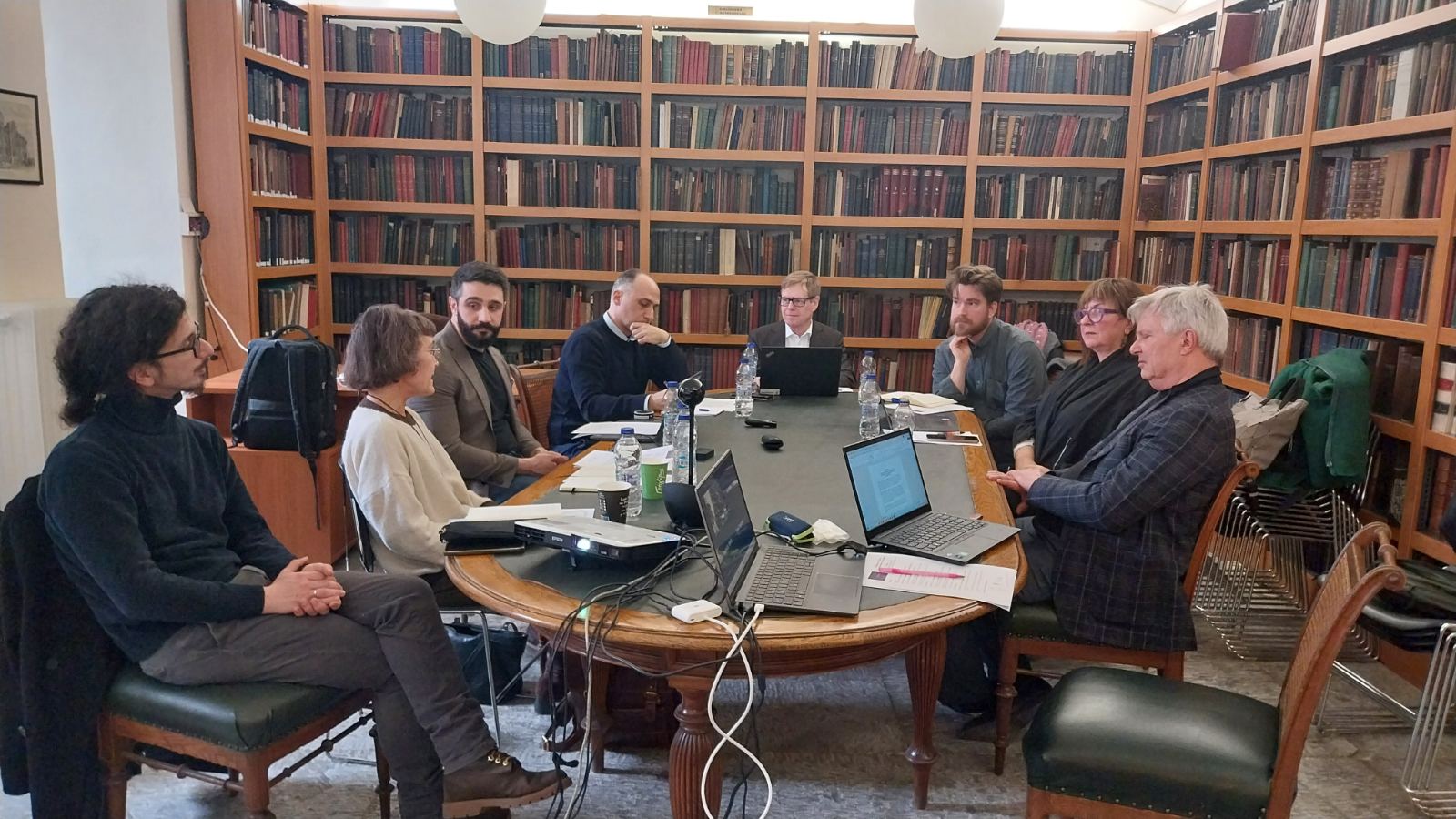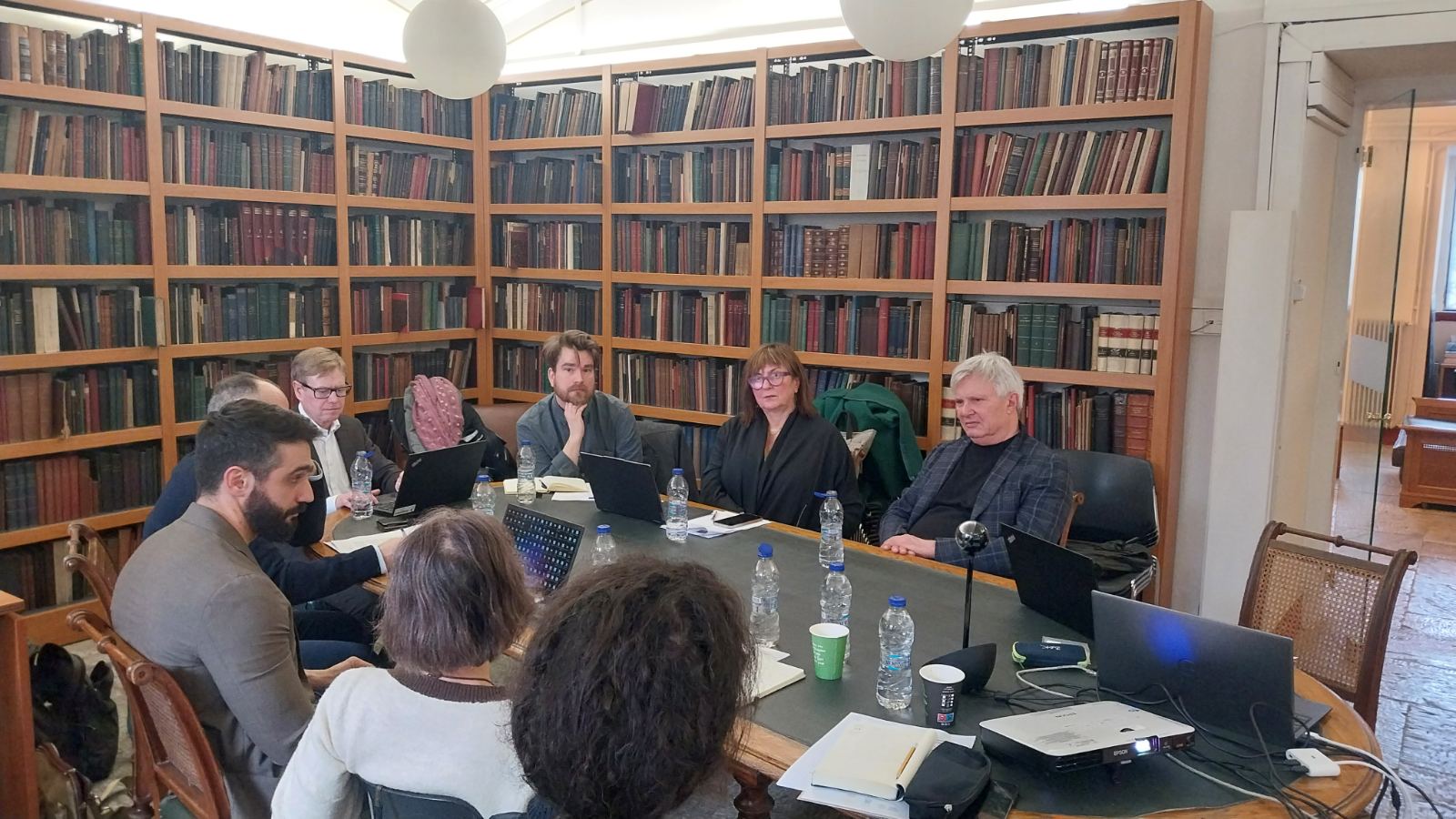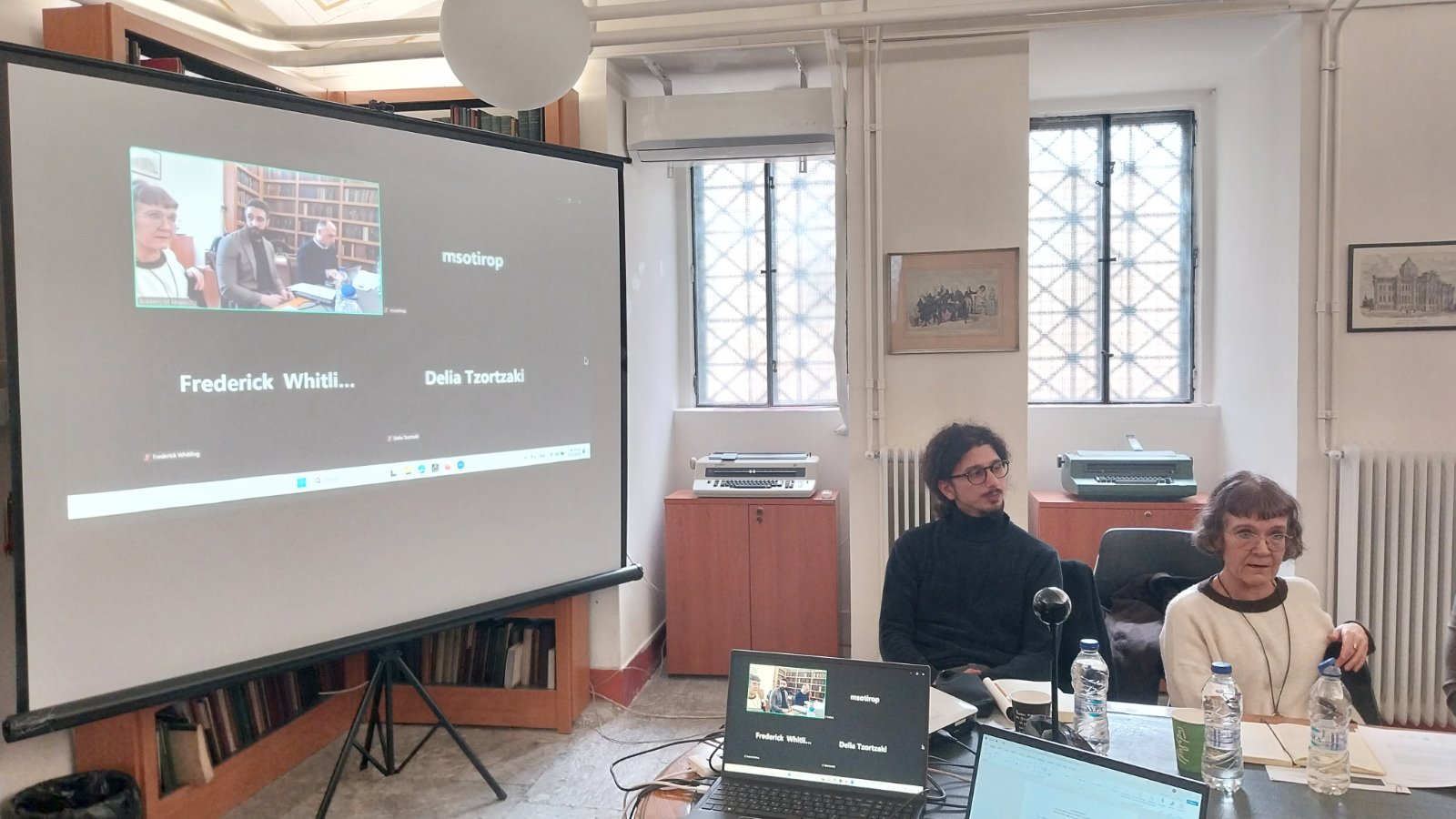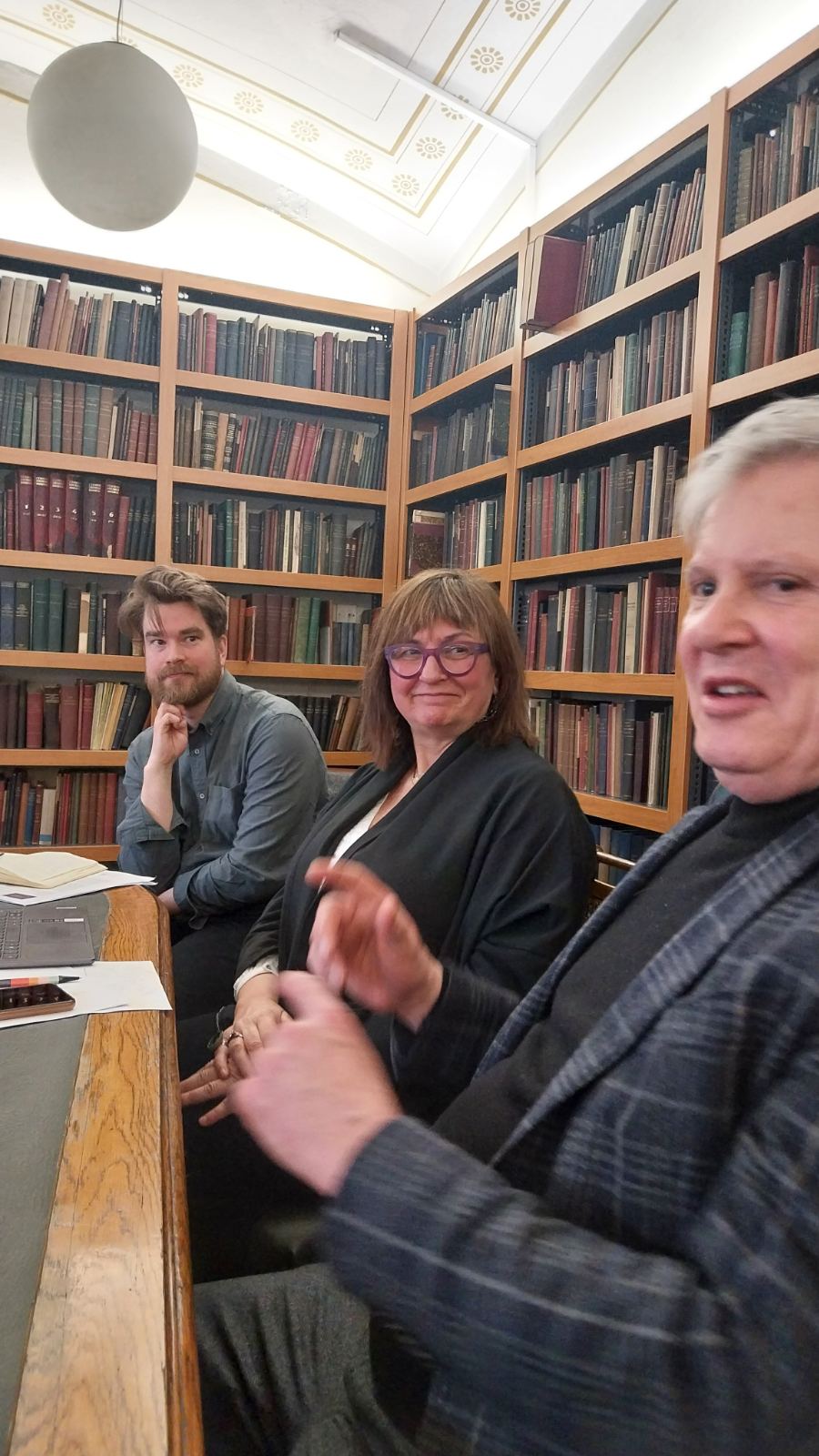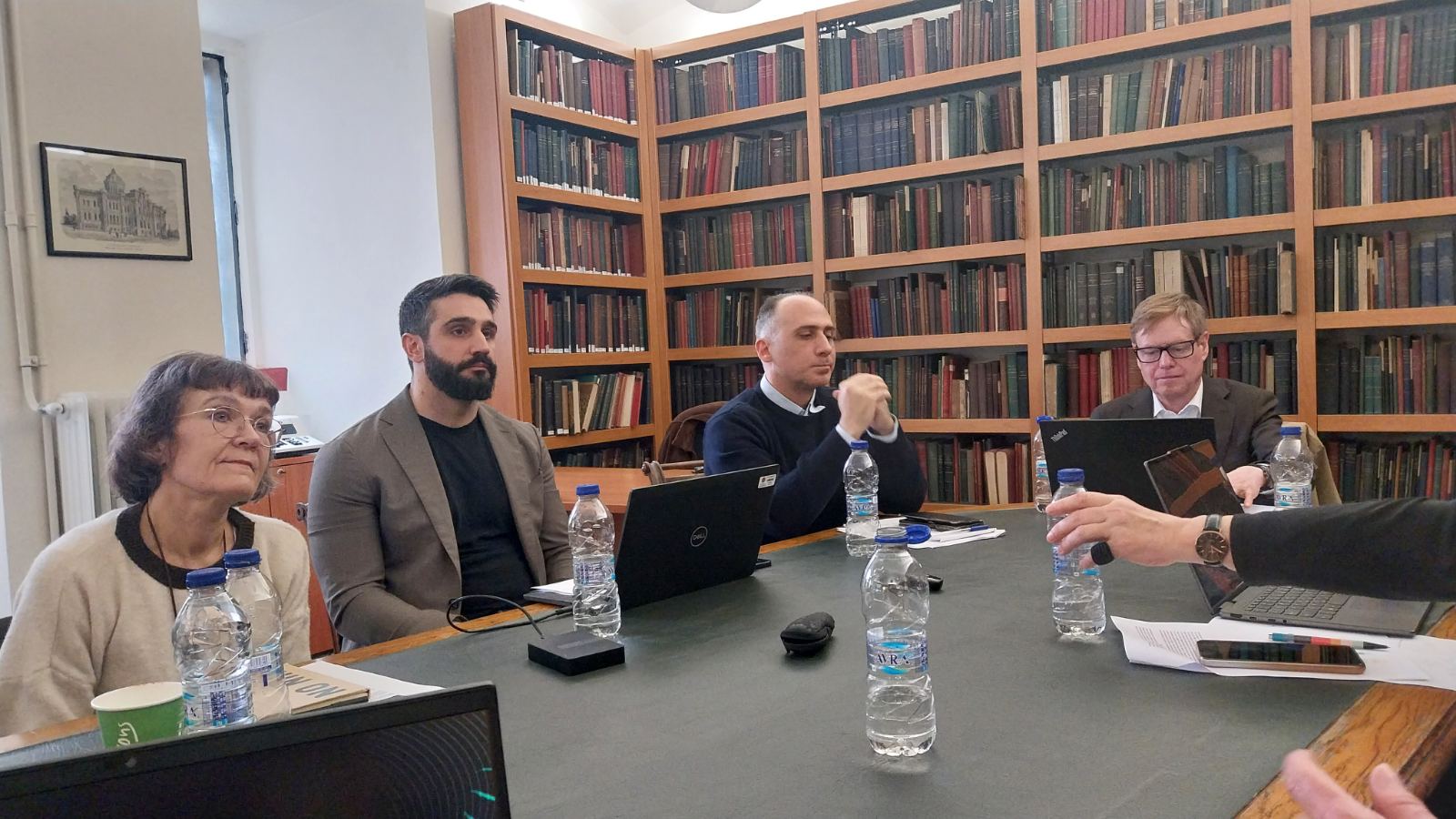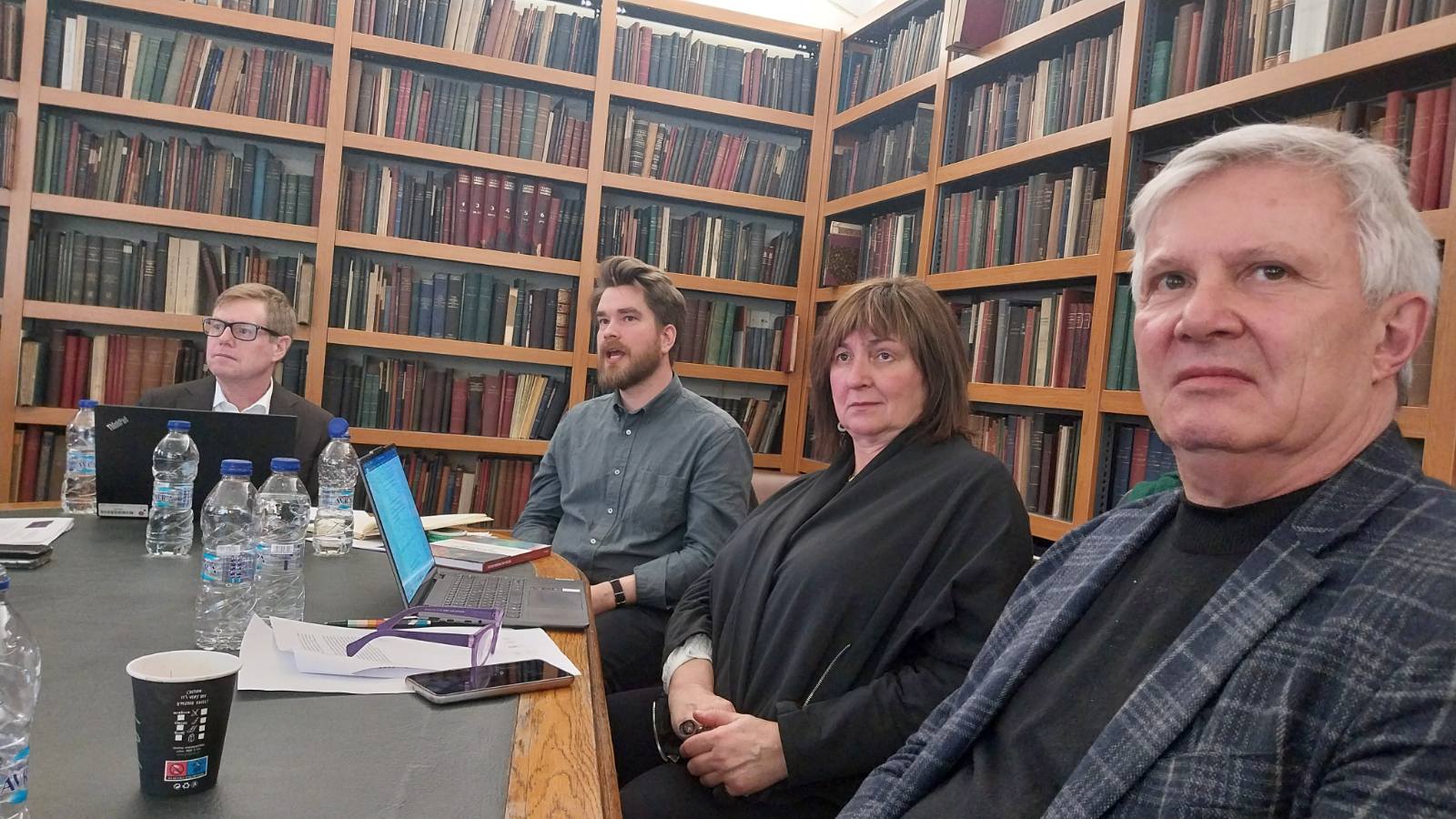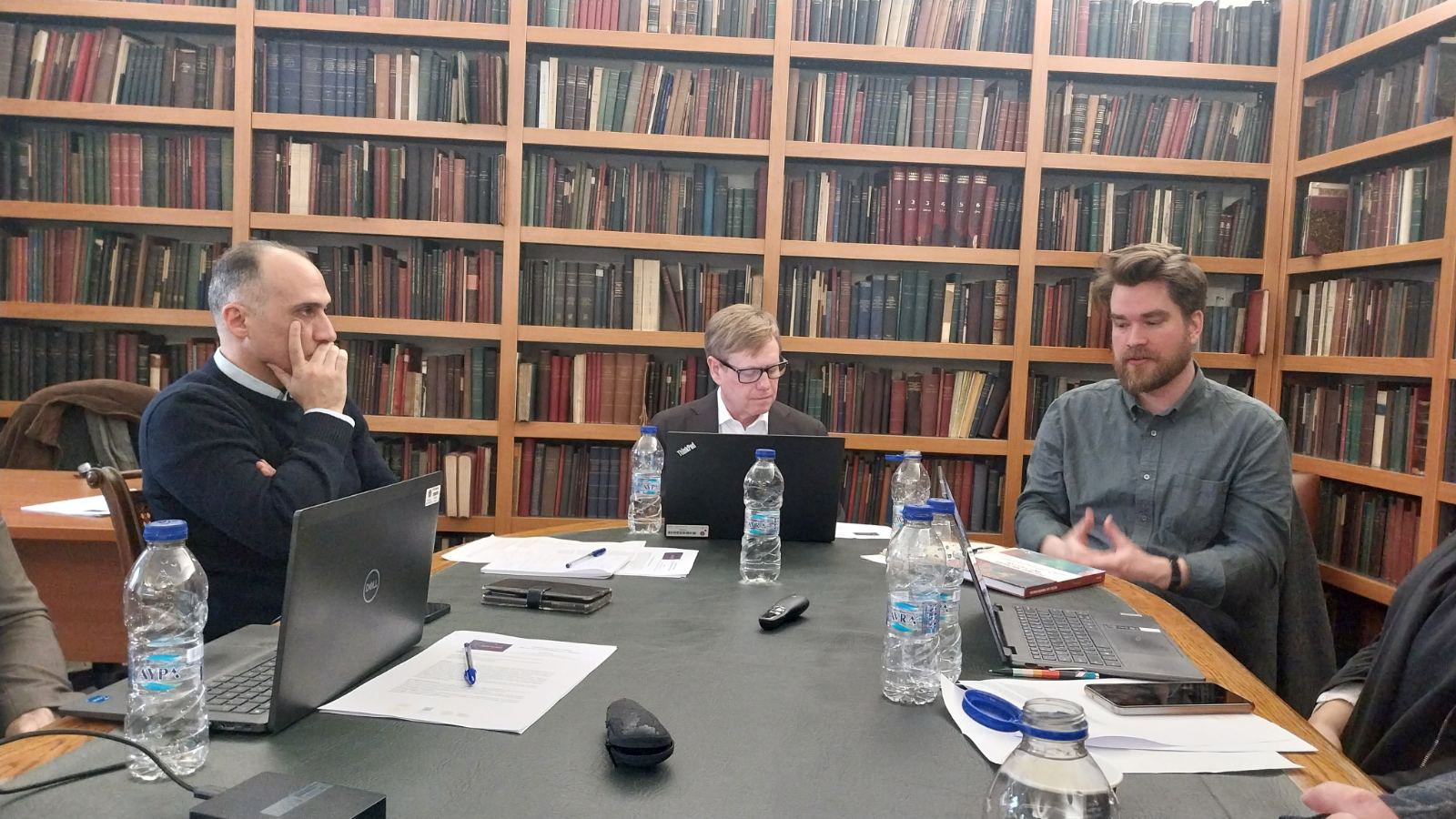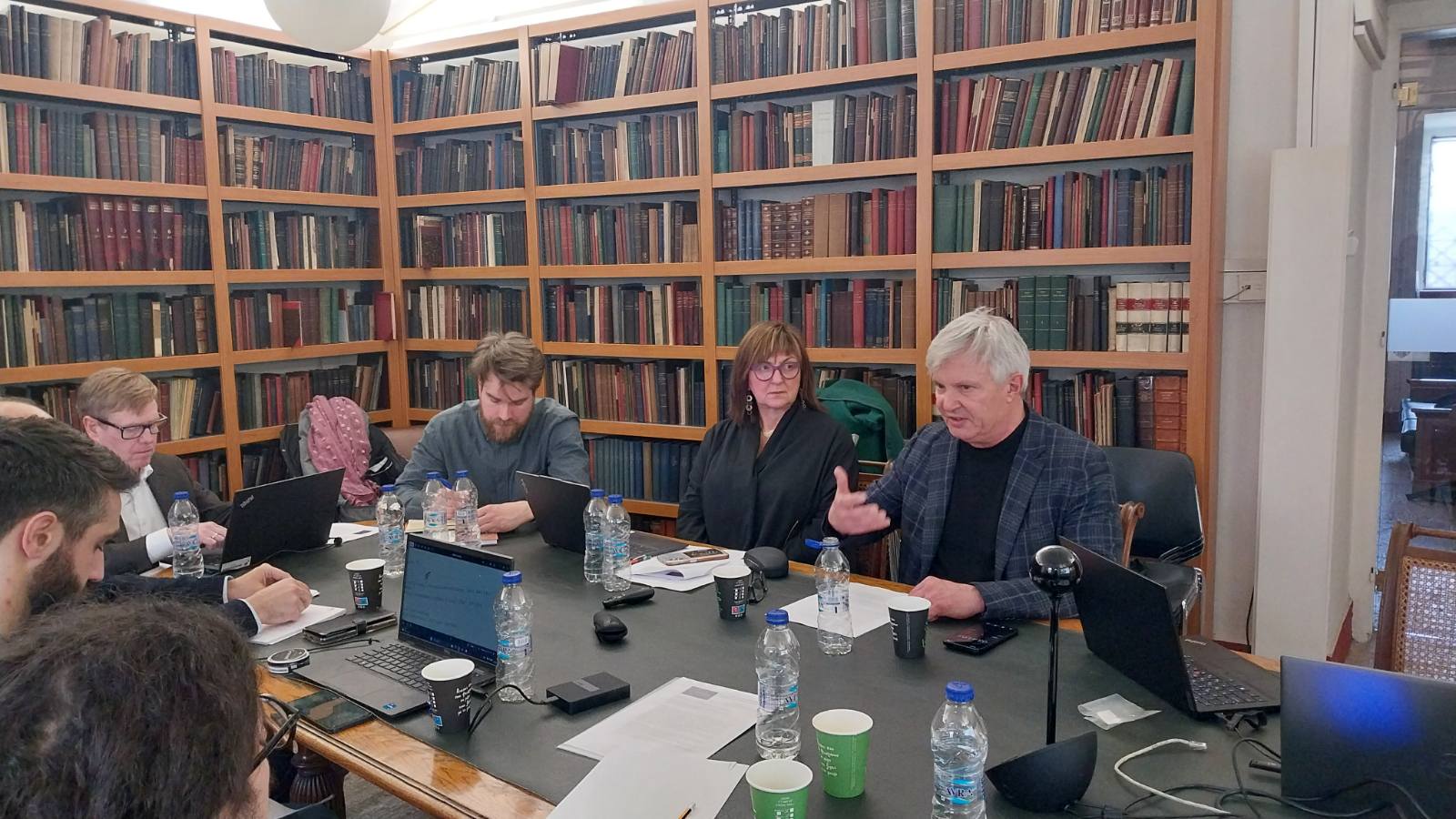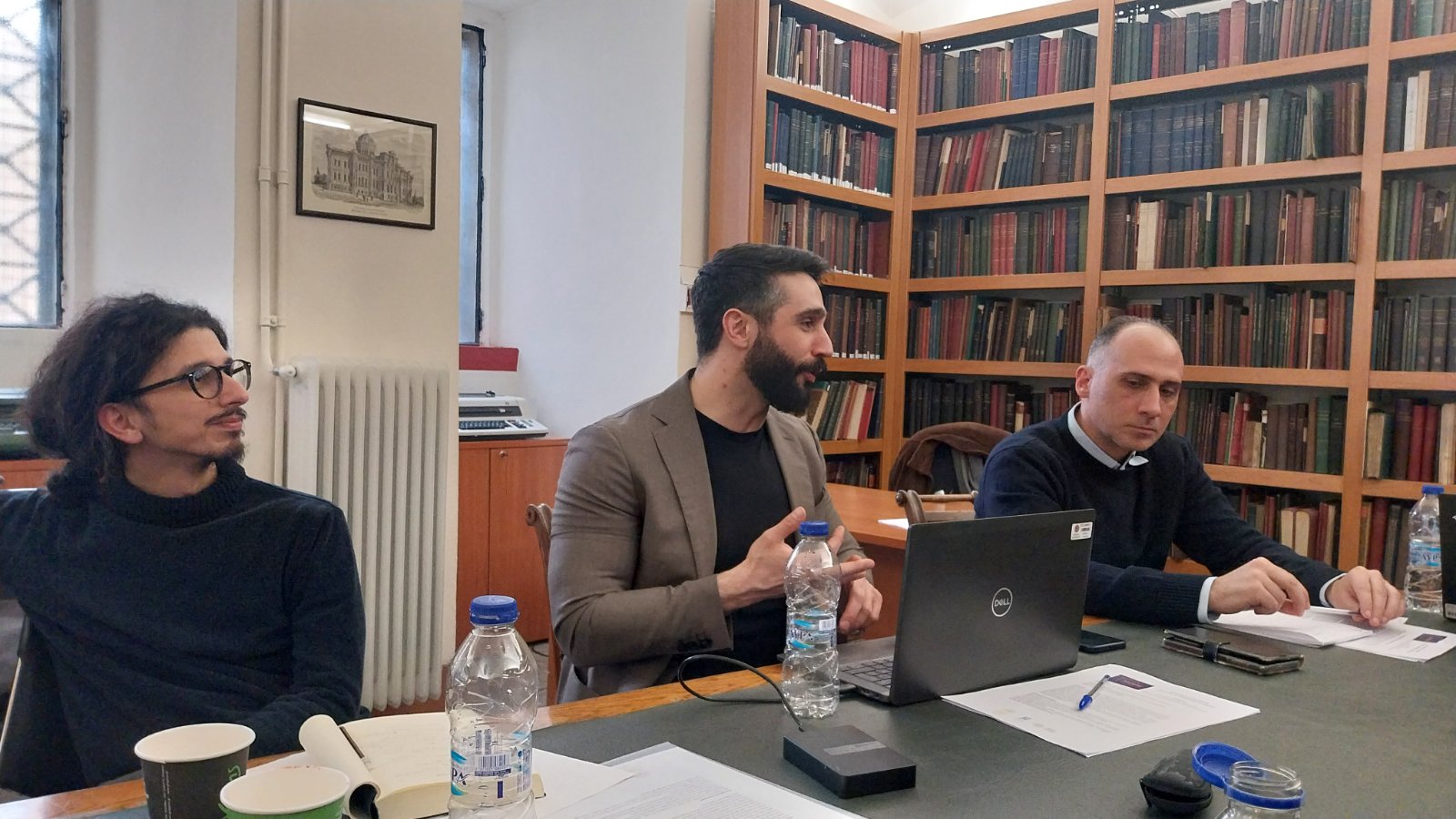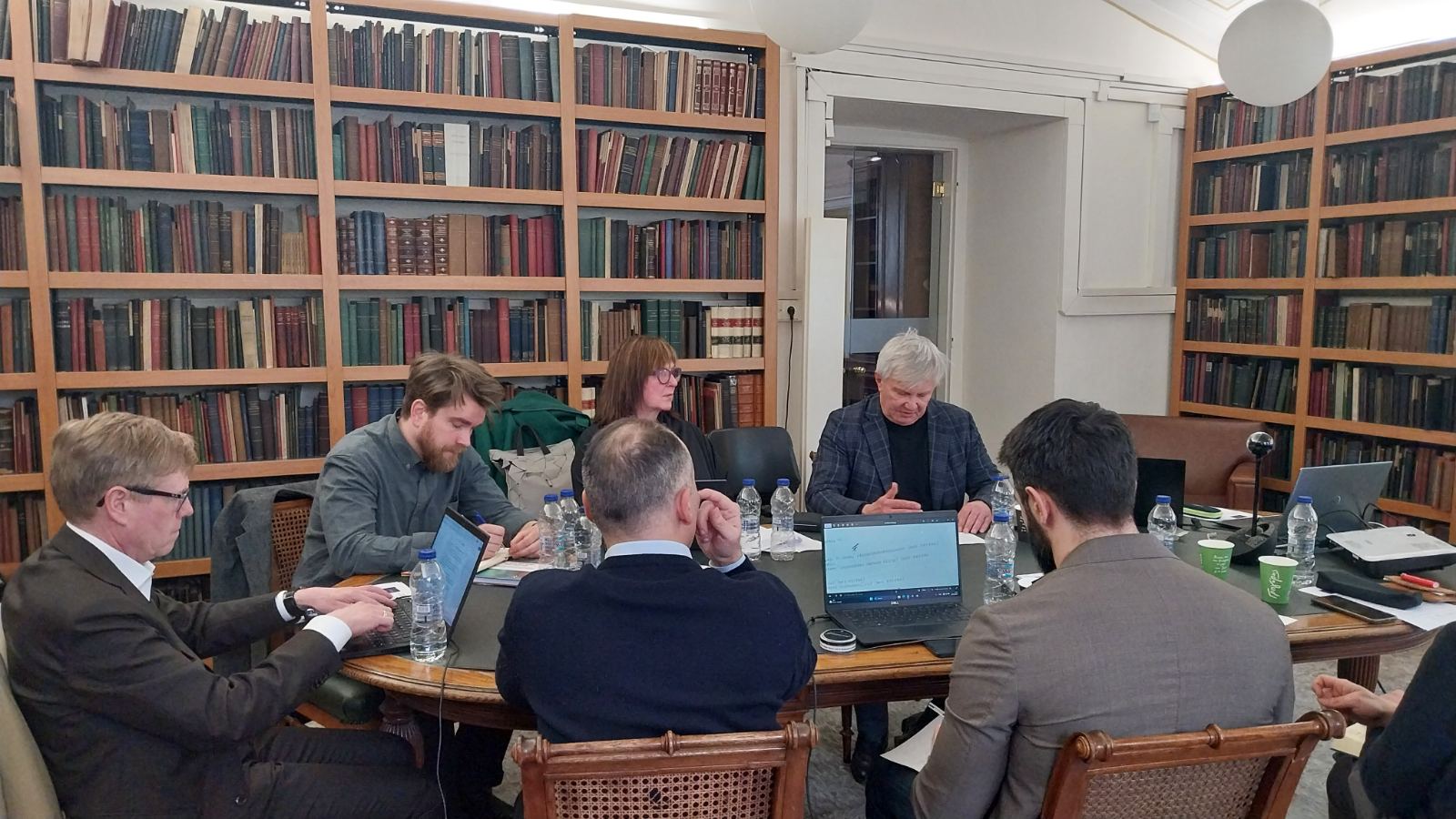
Μεγάλη επιτυχία είχε το διεθνές Εργαστήριο με τίτλο «Small States in the Making: The Nordic and Mediterranean Regions» στο πλαίσιο του Ερευνητικού Προγράμματος NORMED του Κέντρου Έρευνας για τις Ανθρωπιστικές Επιστήμες (ΚΕΑΕ) και με την αρωγή του Ινστιτούτου της Δανίας στην Αθήνα και του Σουηδικού Ινστιτούτου στην Αθήνα.
Το Εργαστήριο πραγματοποιήθηκε την Παρασκευή 27 Φεβρουαρίου 2026 στην Βιβλιοθήκη της Ακαδημίας Αθηνών.
Το κεντρικό ερώτημα ήταν πώς μπορούμε να ξανασκεφτούμε την ιστορία της Ευρώπης μέσα από την εμπειρία, την ιστορία, την οπτική των περιοχών των Βορείων Χωρών και της Μεσογείου με άξονα την ιδιότητα των κρατών που τις απαρτίζουν ως “μικρά” (small states).
Workshop “Small States in the Making: The Nordic and Mediterranean Regions”
27th February 2026, 10.00-15.30
@ Library of the Academy of Athens (28th Panepistimiou Av.)
Organized by:
The Normed Initiative (https://www.rchumanities.gr/en/normed-about/)
Scientific Committee:
Ada Dialla (Athens School of Fine Arts, Research Centre for the Humanities)
George Kalpadakis (Academy of Athens)
Mogens Pelt (University of Copenhagen)
Rationale
How can our understanding of modern and contemporary European history be enriched by approaching it from its margins rather than its centres? This workshop explores how the concept of smallness can serve as a productive analytical lens for rethinking the history of Europe through the experiences of small states and stateless entities, focusing on two regions often seen as distinct: the Nordic/Baltic and the Mediterranean/Balkan worlds.
Rather than treating these regions as separate peripheries, we propose to view them as interconnected zones of adaptation and resilience shaped by great-power politics, imperial transitions, and global entanglements. From the eighteenth century to the present, small states and communities across these spaces have faced similar challenges—war, revolution, shifting borders, colonial encounters, and competing empires—while developing creative strategies of survival, negotiation, and self-definition.
This workshop aims to explore how ‘smallness’ can become a tool for decentering European history by revealing how actors at the margins have shaped the continent’s political, cultural, and intellectual trajectories.
Conceptual Framework
We understand smallness not simply as a question of scale—population size, resources, or military power—but as a historically contingent condition that encompasses:
- The positionality of actors in asymmetric international systems;
- The discursive construction of self and other (how states internalize or resist ‘being small’);
- The strategies small states and entities deploy to assert agency and sovereignty within larger imperial or global frameworks.
Combining insights from history, political science, and international relations, this workshop encourages interdisciplinary dialogue on how smallness interacts with power, sovereignty, and identity in European and global contexts.
Program
Welcome:
Ada Dialla (Athens School of Fine Arts, Research Centre for the Humanities)
Panel 1 (10.00-11.30) — Thinking Small: Concepts, Regions, and Analytical Frameworks
Anders Wivel — Reinventing smallness: Nordicness and the power of the weak
George Kalpadakis — Invented regions, forgotten grammars: Nordic and Balkan regionalisms in comparative-historical perspective
Ada Dialla — From Borderlands to Frontlines: Historiographical Perspectives on the North–South and Mediterranean–Nordic Regions
Panel 2 (12.00-13.30) — Small States, Sovereignty, and Moral Agency
Costas Polyzos — Religion and the Negotiation of Sovereignty in Small States in the Making: The Case of 19th-Century Greece (1832–1881)
Matthaios Amanatiadis — Three kids in a trench coat? Breaking down Scandinavian exceptionalism during the Cold War
Pontus Järvstad — Nordic Anti-fascist Solidarity with Greece (1967–1974)
Panel 3 (14.00-15.30) — Geopolitics, Empires, and Entanglements from the Margins
Mogens Pelt — Small regions and major geopolitical shifts from the Great Northern War to the present
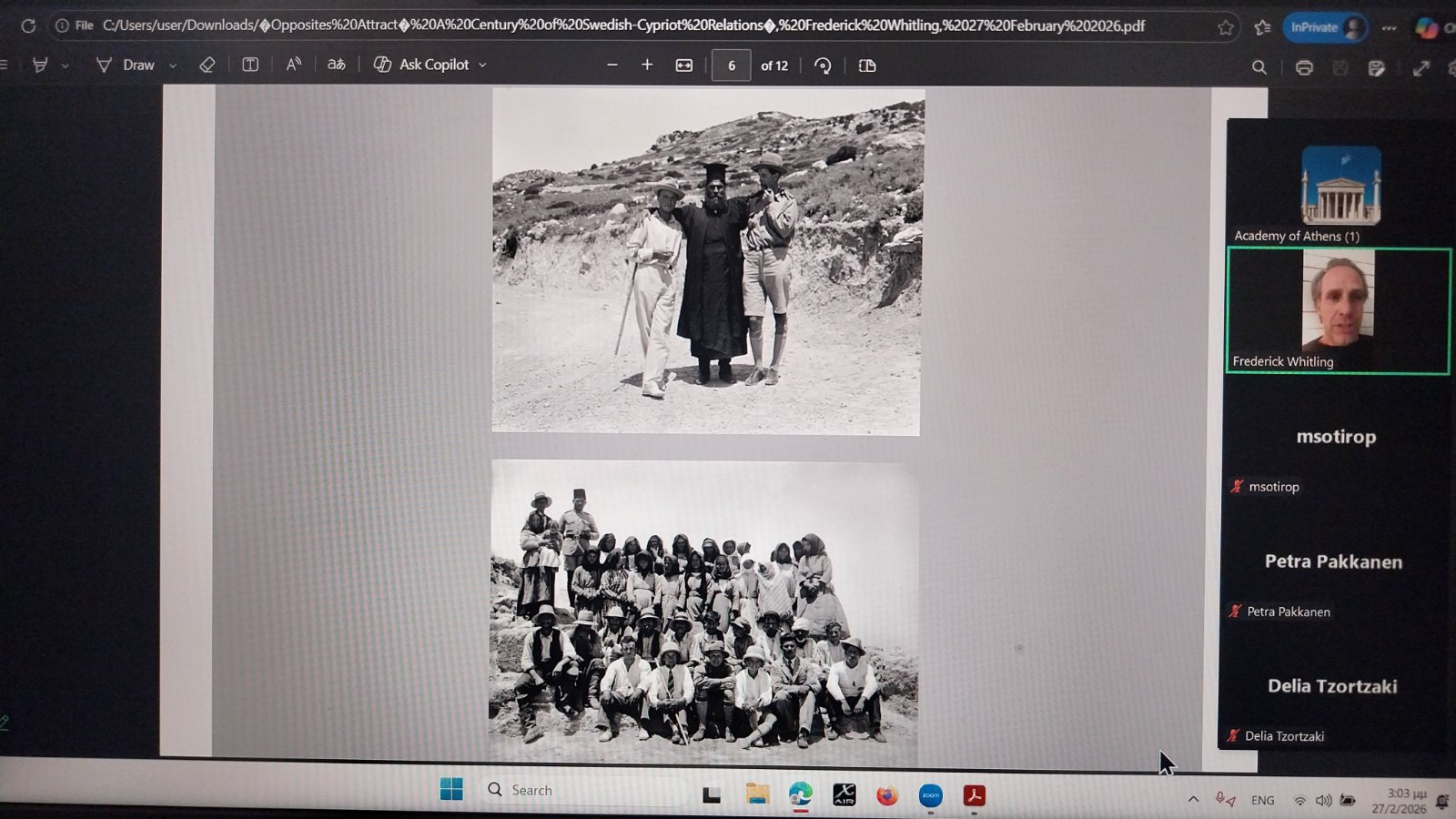
Frederick Whitling — Opposites Attract? A Century of Swedish–Cypriot Relations
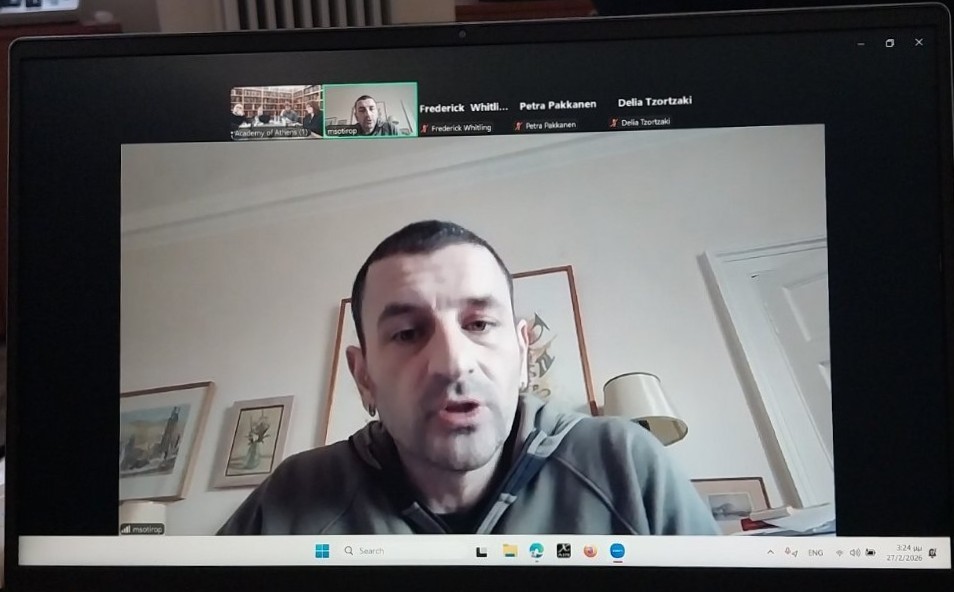
Michalis Sotiropoulos — Challenging empire in the Eastern Mediterranean in the mid-19th century
Short Biographical Notes (in alphabetical order)
Matthaios Amanatiadis is a PhD candidate in History at Uppsala University. He holds a Bachelor of Arts in History from Stockholm University and a Master of Arts in Modern History from Uppsala University. His research examines Scandinavian foreign policy, transnational activism, and the role of non-state actors in international affairs during the Cold War, with a particular focus on the Scandinavian response to the Greek military dictatorship. He is affiliated with the Hans Blix Centre for the History of International Relations and the Swedish Network for Fascism Studies (SWEFAS).
Dr. Ada Dialla is Professor of European History at the Department of Theory and History of Art, School of Fine Arts (Athens). She studied History at the State University of Moscow (Lomonosov) (B.A. and M.Sc.), the Department of History and Archaeology, and the Department of Political Science, both at the University of Athens. She subsequently became a visiting researcher at the Russian Academy of Sciences (St Petersburg), the École des Hautes Études en Sciences Sociales (Paris), the Jordan Center for Advanced Studies of Russia at New York University, and Princeton University. Throughout her academic career, she has taught 19th- and 20th-century European, Russian, and Eastern European history at the universities of Crete and Thessaly, and at the Greek Open University. From 2004 to 2009, she served as director of the Historical Archives of the University of Athens. Currently, she is a founding member and chair of the Athens-based Governing Board of the Research Center for the Humanities, and a member of the Scientific and Editorial Board of the interdisciplinary journal Historein: A Review of the Past and Other Stories. Her primary research interests include 19th- and 20th-century Russian, European, and Global history (with a focus on transnational history, Empires, and Nationalism); the history of humanitarian interventions and humanitarianism; the Greek-Russian cultural and political space; the Greek Revolution of 1821; and Russian historiography.
Pontus Järvstad is a Postdoc in history at the University of Iceland. His forthcoming monograph with Routledge, Postwar Mnemonic Anti-Fascism: From the Spanish Question to the Nordic Committees against the Greek Junta, 1946–1974, is based on his PhD thesis, which received the 2024 Danish Labor History Prize. He has contributed a chapter to the anthology Anti-Fascism in European History From the 1920s to Today (Central European University Press, 2023), examining a fascinating Swedish anti-fascist committee that also dealt with anti-racism during the 1960s. Together with historian Ragnheiður Kristjánsdóttir, he has co-authored a chapter about Icelandic anti-fascism in the 1930s in the anthology Anti-fascism in the Nordic Countries: New Perspectives, Comparisons and Transnational Connections (Routledge, 2019).
George Kalpadakis is Senior Researcher at the Academy of Athens’ Modern Greek History Research Center, elected in 2018. His research focuses on Greek and Southeast European foreign policy, conflict and peace studies, and institution-building. In 2024–25 he was Visiting Professor at the University of Vienna (Department of Byzantine and Modern Greek Studies). He previously taught undergraduate and postgraduate courses in International Relations and Political Science at Democritus University of Thrace and the University of Crete (2011–18). He was a Fulbright Visiting Scholar at Harvard University’s Center for European Studies (2021–22) and held the Lewis-Gibson Visiting Fellowship at the University of Cambridge’s Centre for Greek Studies (2023–24). He has also been a Visiting Scholar at Cambridge’s Centre of Development Studies and a Research Fellow at the Hellenic Center for European Studies (Greek Ministry of Foreign Affairs). He serves on the Editorial Board of the Scandinavian Journal of Byzantine and Modern Greek Studies and previously on the board of Millennium: Journal of International Studies. He is the author of Cyprus Conflict: Diplomacy as Dissent, 1954–1974 (Routledge, forthcoming 2026); Une Confédération des Balkans: le projet de Jean Capodistrias (Favre, 2026); and The Macedonian Issue: From Silence to Popular Diplomacy, 1962–1995 (Athens, 2024, 3rd ed., in Greek), which received the Academy of Athens Prize (2013). He holds a BSc (Hons) from UCL, an MSc from LSE, and a PhD with Distinction from the University of Athens (2009).
Mogens Pelt PhD et Dr.Phil. is Associate Professor in International History at the History Section at the Saxo-Institute, University of Copenhagen. He was the Director of the Danish Institute at Athens 2020 to 2024; he is directing the research project The Greek Revolution and European Republicanism, 1815-1830: Ideas of Nation, People and Citizenship in the Making of the Constitutional State (Independent Research Fund Denmark); member of the steering group for CHIOS (Centre for History, Strategy & International Order), University of Copenhagen / Helmut-Schmidt-Universität Hamburg; alternate member of the steering group for UCPH (University of Copenhagen) Geopolitics; co-director with Professor Catharina Raudvere at the Centre ‘Many Roads in Modernity: South-eastern Europe and its Ottoman Roots’, University of Copenhagen (Carlsberg Foundation); member of directing board of Centre of the Study of Nationalism University of Copenhagen). He was a Stanley J. Seeger Fellow at the Program in Hellenic Studies, Princeton University 2008-9, attached to the Commission established by the Danish Parliament to Investigate the Danish Security Intelligence Service 2007-8; a researcher in the project Captive States, Divided Societies, Political Institutions of Southeastern Europe in Historical Comparative Perspective (Volkswagen Foundation); a visiting Fellow at the Department of Near Eastern Studies, Princeton University in 1999 and Deputy-director at the Danish Institute at Athens, 1993-96.
Costas Polyzos is a PhD Candidate at the Department of Sociology of the University of Athens. His thesis, titled “Elements of Orthodox Ethics: a Weberian approach to the Orthodox tradition in 19th century Greece”, attempts to uncover the social implications of orthodox religiosity in Greek culture, politics and economy of 19th century Greece. He has worked as a website and database editor for the “1821 Digital Archive” research project implemented by the Research Centre for the Humanities (RCH), and the “1821 Greek Revolution Observatory” research project carried out by the Laboratory of Modern and Contemporary History of the Democritus University of Thrace in collaboration with the RCH and the journal “Historein”. He now works as a Graduate Assistant at the Norwegian Institute at Athens. His research interests include history and sociology of religion, Orthodox Christianity, modern Greek history, Weber studies, epistemology and methodology of the social sciences.
Dr. Michalis Sotiropoulos is Lecturer in Modern Greek Studies and member of the A.G. Leventis Centre for Greek Studies at the University of Edinburgh (UK). Before this post, Michalis held research and teaching positions at several institutions including Princeton University, the University of Athens, the Research Centre for the Humanities in Athens, and the British School at Athens where he led a three-year research project on British Philhellenism. His research focuses on what Franco Venturi described as a “political history of ideas” with an emphasis on the history of the modern Greek world, the Age of Revolutions, and more generally the Mediterranean during the 18th and 19th centuries. He has published extensively on these themes, while his book, Liberalism after the Revolution: The Intellectual Foundations of the Greek State, c. 1830–1880 (Cambridge University Press), was awarded the 2024 Edmund Keeley Book Prize by the Modern Greek Studies Association. His edited volume Philhellenism and the Greek Revolution of 1821: Towards a Global History is forthcoming with Routledge.
Frederick Whitling (PhD, History and Civilization, European University Institute, 2010) is a writer and researcher in the fields of the history of archaeology as well as, primarily, modern Mediterranean history. Two monographs were published in 2023, that indicate the span of related topics covered in some of his scholarly work: Palais de Suède. From Ottoman Constantinople to Modern Istanbul, and Kulturkungen. Gustaf VI Adolf från A till Ö [The Culture King. Gustaf VI Adolf From A to Z]. Whitling presently conducts a research project on the Swedish Cyprus Expedition in historical perspective and is currently a visiting researcher at University of Cyprus (Department of History and Archaeology, Archaeological Research Unit). He has published on archaeology and politics in Cyprus, in Swedish, in for example the review Medusa (2023), the online daily Opulens (2024), and in a forthcoming museum catalogue (Malmö konstmuseum, 2025/2026).
Anders Wivel is Professor of International Relations in the Department of Political Science, University of Copenhagen. He has published widely on small state foreign policy, European and international order and peaceful change, and power politics and IR realism. Together with Revecca Pedi, University of Macedonia, he is the chair of the European International Studies Association (EISA) standing section on ‘Small States in World Politics’. His academic articles have been published in journals such as International Affairs, International Studies Review, International Relations, Foreign Policy Analysis, European Journal of International Security, Ethics and International Affairs and European Security. His most recent books are International Organizations and Peaceful Change in World Politics (co-edited with T.V. Paul and Kai He, Cambridge University Press, 2025), Polarity in International Relations: Past, Present, Future (co-edited with Nina Græger, Bertel Heurlin and Ole Wæver, Palgrave, 2022), Oxford Handbook of Peaceful Change in international relations (co-edited with T.V. Paul, Deborah W. Larson, Harold Trinkunas and Ralf Emmers, Oxford University Press 2021), and Handbook on the Politics of Small States (co-edited with Godfrey Baldacchino, Edward Elgar, 2020).

Πρόγραμμα Workshop (Pdf)